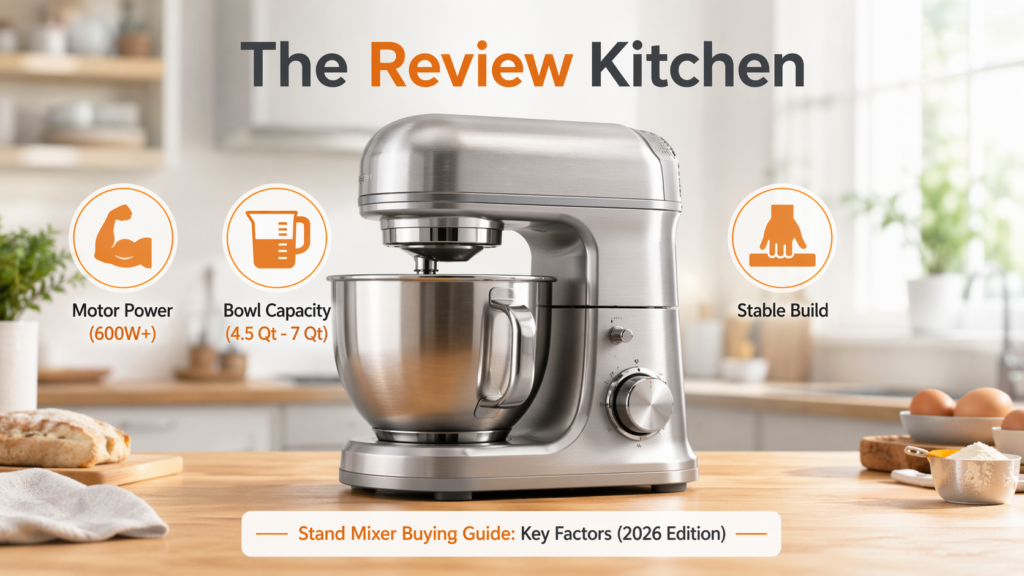
A stand mixer is not just another kitchen gadget — it’s a long-term investment in your baking journey.
But here’s the truth most people don’t tell you:
The most expensive mixer isn’t always the best one for you.
Choosing the right mixer depends on your needs, habits, and budget, not just price tags or brand names.
This stand mixer guide will help you understand exactly what matters — so you can make a smart, confident decision.
Key Factors to Consider (The Technical Specs)
Motor Power & Wattage (The Heart of Mixing Power)
When it comes to performance, motor type matters more than raw wattage.
AC vs DC Motors
- AC Motors
- More durable
- Designed for heavy-duty use
- Common in high-end mixers
- DC Motors
- Lighter and quieter
- More energy efficient
- Better for light to moderate use
What Wattage Do You Actually Need?
- 300W – 400W
- Light mixing (cakes, whipped cream)
- Occasional use
- 500W – 700W
- Balanced performance
- Handles most baking tasks
- 700W+
- Heavy dough (bread, pizza)
- Frequent baking
👉 If you plan to knead dough regularly, prioritize strong mixing power over everything else
Bowl Capacity (Choose the Right Size)
Size matters — but only if it fits your lifestyle.
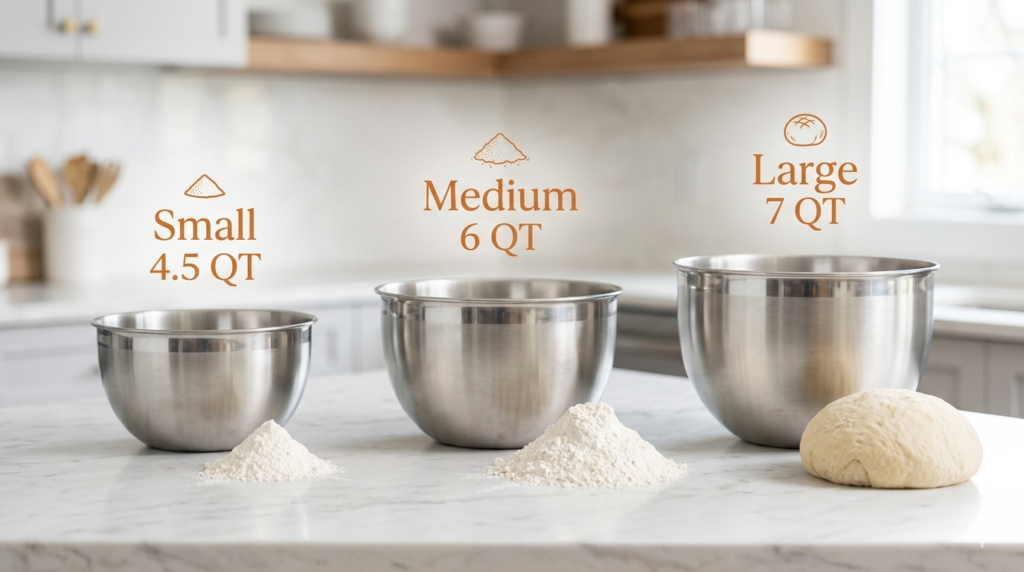
Recommended Sizes
- 4.5 QT
- Singles or couples
- Small batches
- 5–6 QT
- Most home bakers
- Best all-around choice
- 6–7 QT
- Large families
- Batch baking or meal prep
Bigger bowls are useful, but they also take more space and power
Build Quality (Metal vs Plastic + Stability)
This is where long-term value is decided.
Housing Material
- Plastic Body
- Lightweight
- Budget-friendly
- Less durable over time
- Metal Body
- Strong and long-lasting
- Better vibration control
- Premium feel
Stability: Weight vs Suction Cups
- Lightweight Mixers (with suction cups)
- Stay in place during light tasks
- Can shake under heavy load
- Heavy Mixers (metal base)
- Naturally stable
- No movement during kneading
- Better overall performance
Stability directly impacts mixing consistency and safety
Speeds & Attachments (Precision Matters)
Control is what separates average baking from great baking.
Speed Settings
- 6 Speeds
- Basic control
- Enough for beginners
- 8–10 Speeds
- Better precision
- Ideal for most recipes
More speeds = better control over texture and results
Essential Attachments
Most mixers include:
- Dough hook
- Whisk
- Flat beater
Optional attachments can expand your mixer into a complete baking system
Identify Your Needs (Choose Your Category)
Now that you understand the specs, it’s time to identify what type of baker you are.
The Power-Seeker
You:
- Bake frequently
- Work with bread and heavy dough
- Need strong performance
What to look for:
- 700W+ motor
- 6QT+ capacity
- Heavy, stable design
The Lifetime Investor
You:
- Want long-term durability
- Prefer premium build quality
- Care about aesthetics and consistency
What to look for:
- Metal construction
- AC motor
- Proven reliability
The Practical Beginner
You:
- Bake occasionally
- Want something easy to use
- Care about value for money
What to look for:
- 500W–600W motor
- 5–6QT bowl
- Simple controls
The Bridge: From Knowledge to Action
Now that you understand how to evaluate a stand mixer based on:
- Mixing power
- Bowl size
- Build quality
- Features
👉 The next step is choosing the right model that matches your profile.
To save you time, we’ve already done the hard work.
We tested and analyzed the market to find the top-performing stand mixers for each type of user.
Final Thought
The best stand mixer isn’t the most expensive one —
👉 It’s the one that fits your baking style, kitchen needs, and budget.
Make your choice based on function, not hype, and you’ll end up with a tool that serves you for years.